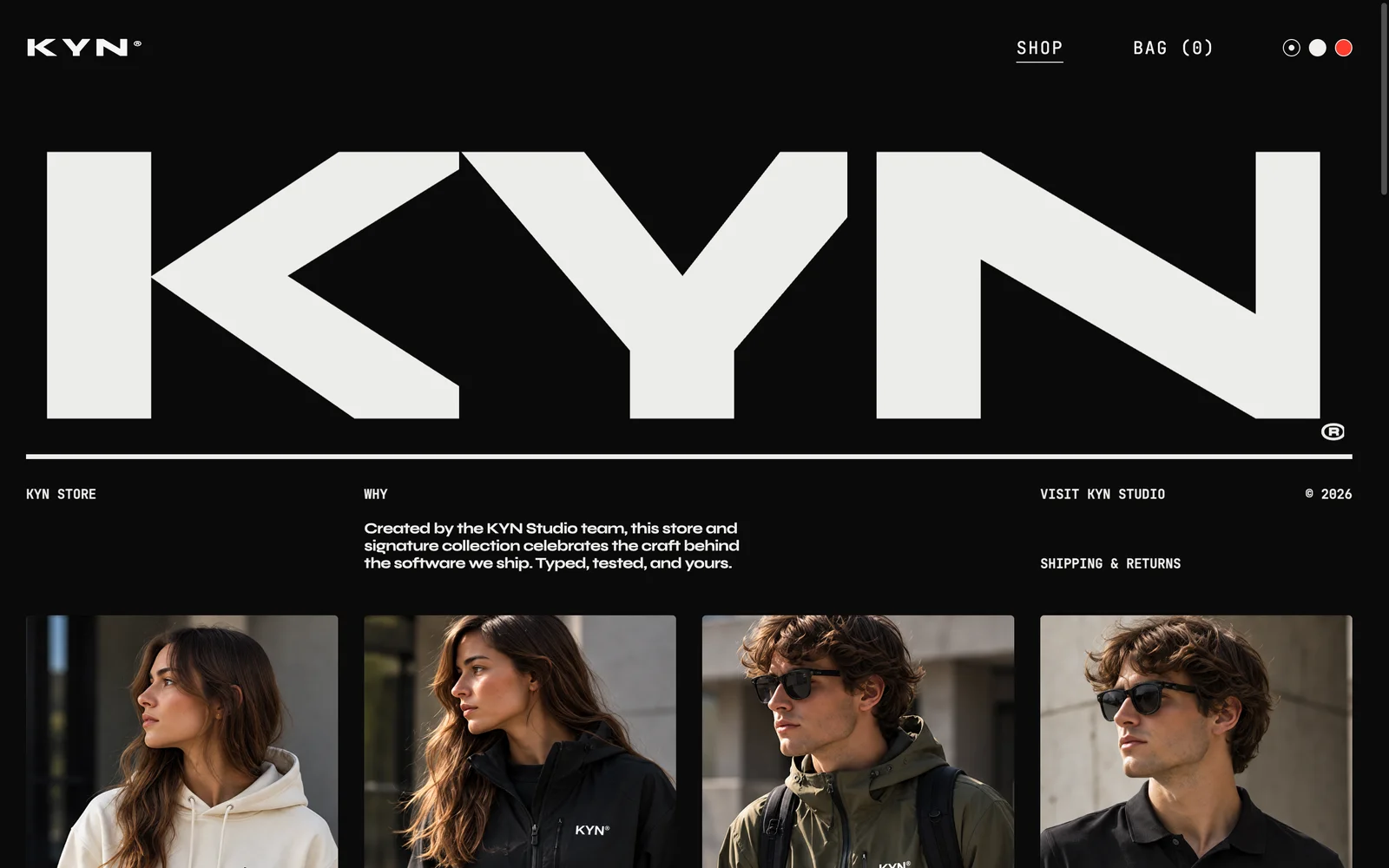
KYNStore
A custom storefront for KYN Studio’s signature collection. Expressive typography, apparel and accessory previews, three visual themes and an image-based jacket viewer bring the studio’s identity into a merchandise experience. The live catalog is currently coming soon, with purchasing disabled.
Explore the storefrontSoftware, carefully worn.
An internal KYN Studio project
The store extends KYN’s identity beyond software into a collection of apparel, accessories and everyday objects. This case covers the branded interface, front-end architecture and AI-assisted product presentation. It does not document manufactured stock, a photo shoot or an operational sales channel.
These are delivered interface capabilities and catalog scope, not sales or conversion results.
A studio collection should feel like the studio, not a generic shop template.
The challenge was to make a merchandise catalog unmistakably KYN: expressive enough to stand as a brand experience, structured enough to browse, and honest about a collection that is not yet available to buy.
Make the collection tangible. Keep its status clear.
A brand-led catalog, built around the product.
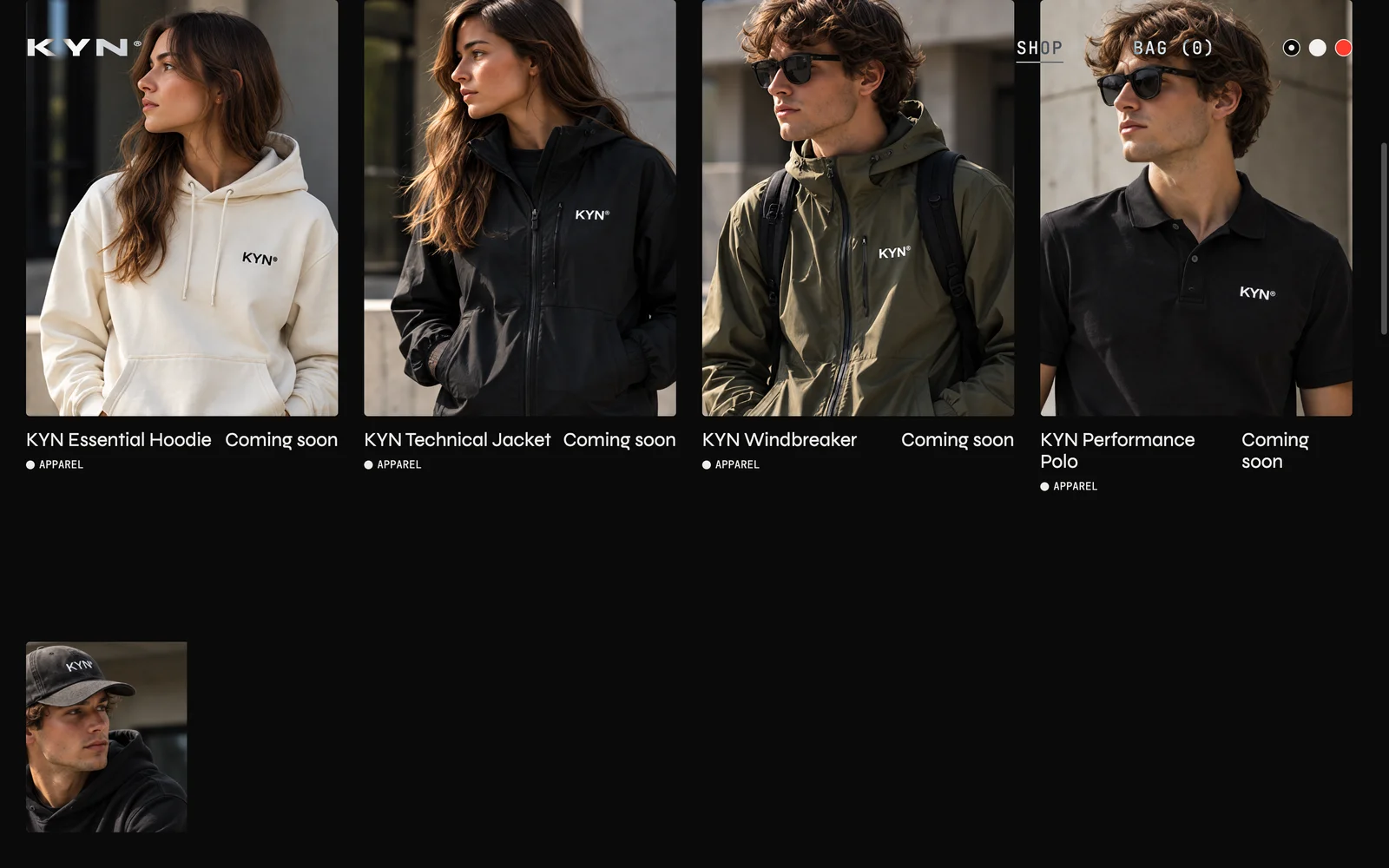
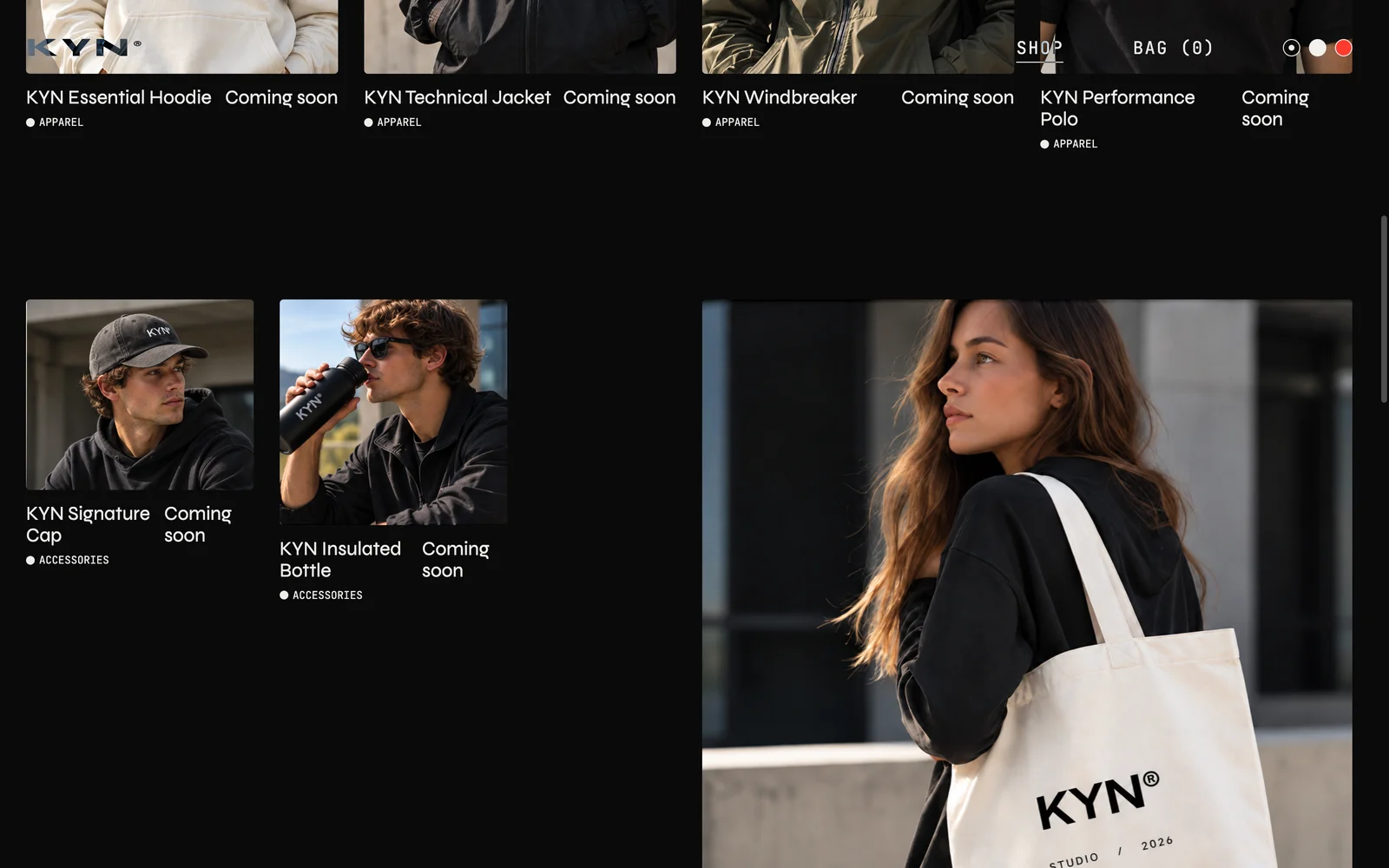
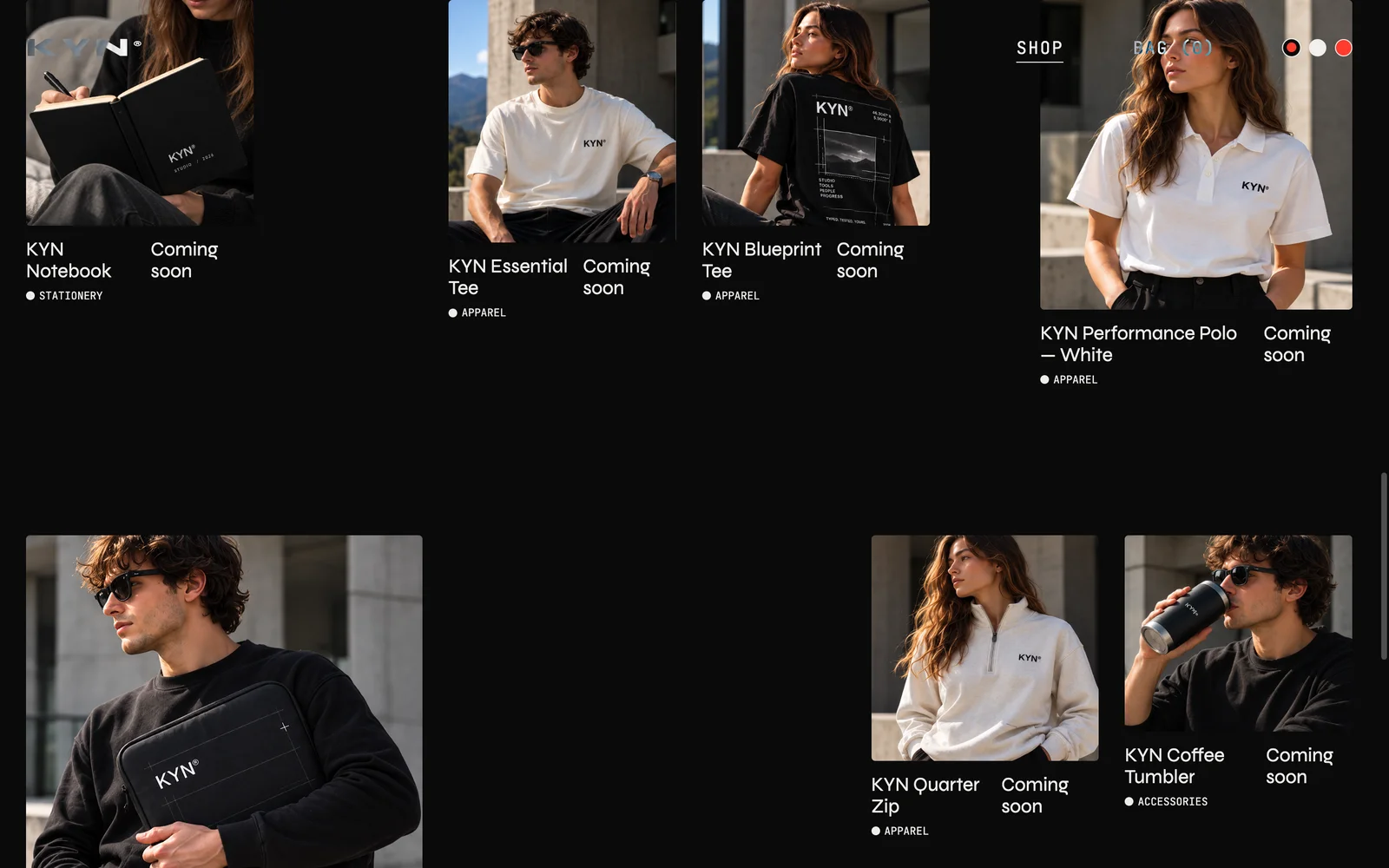
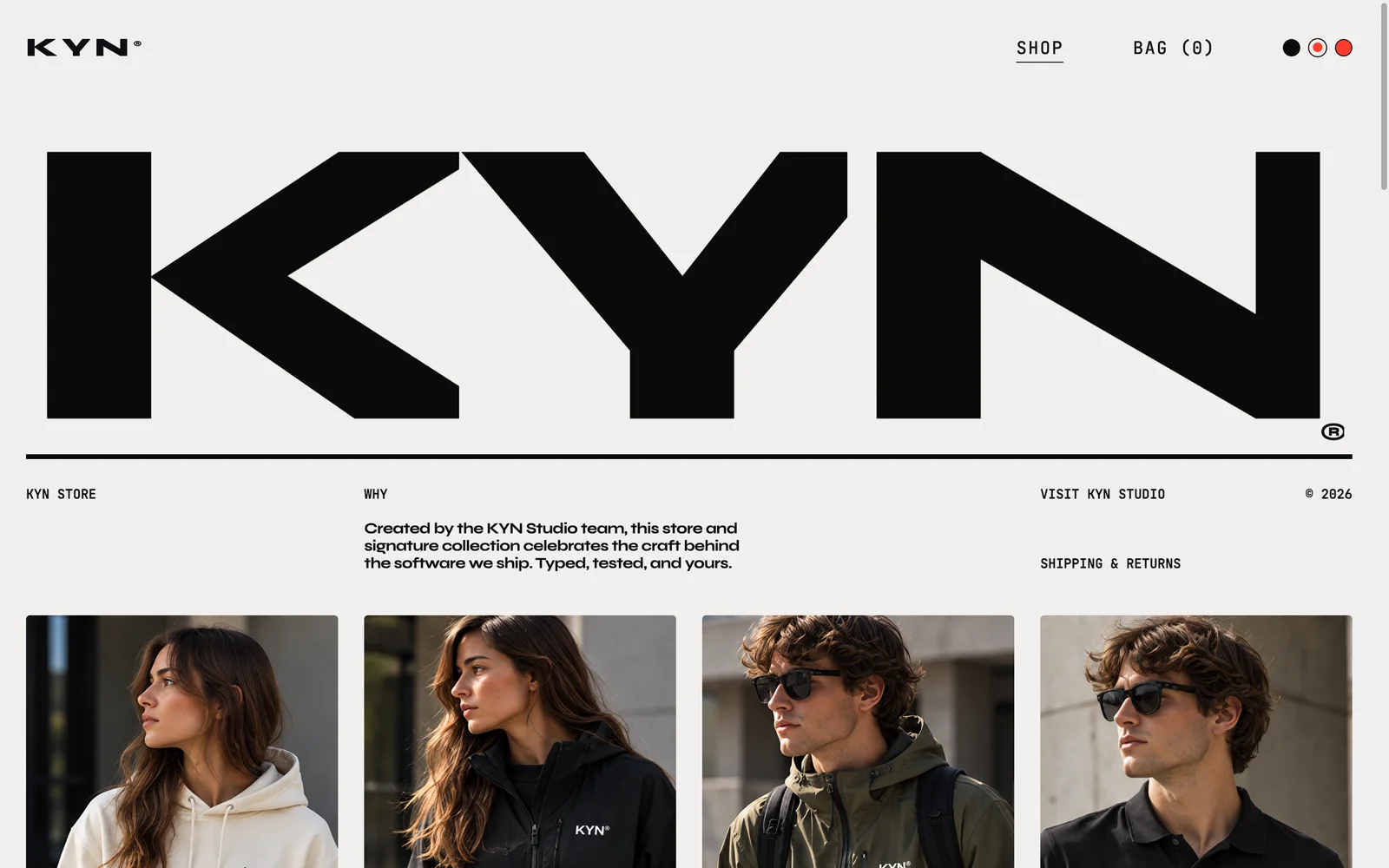
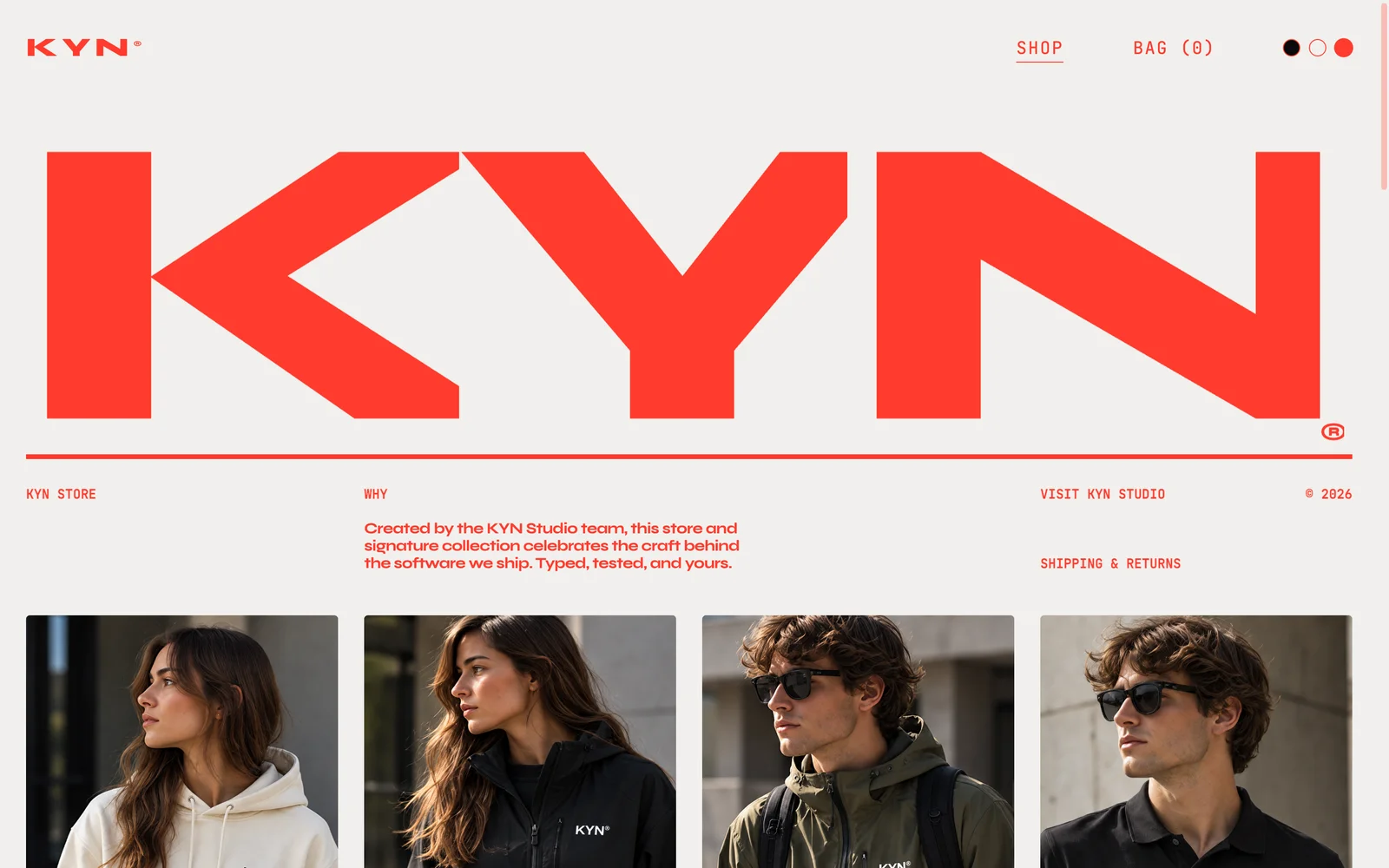
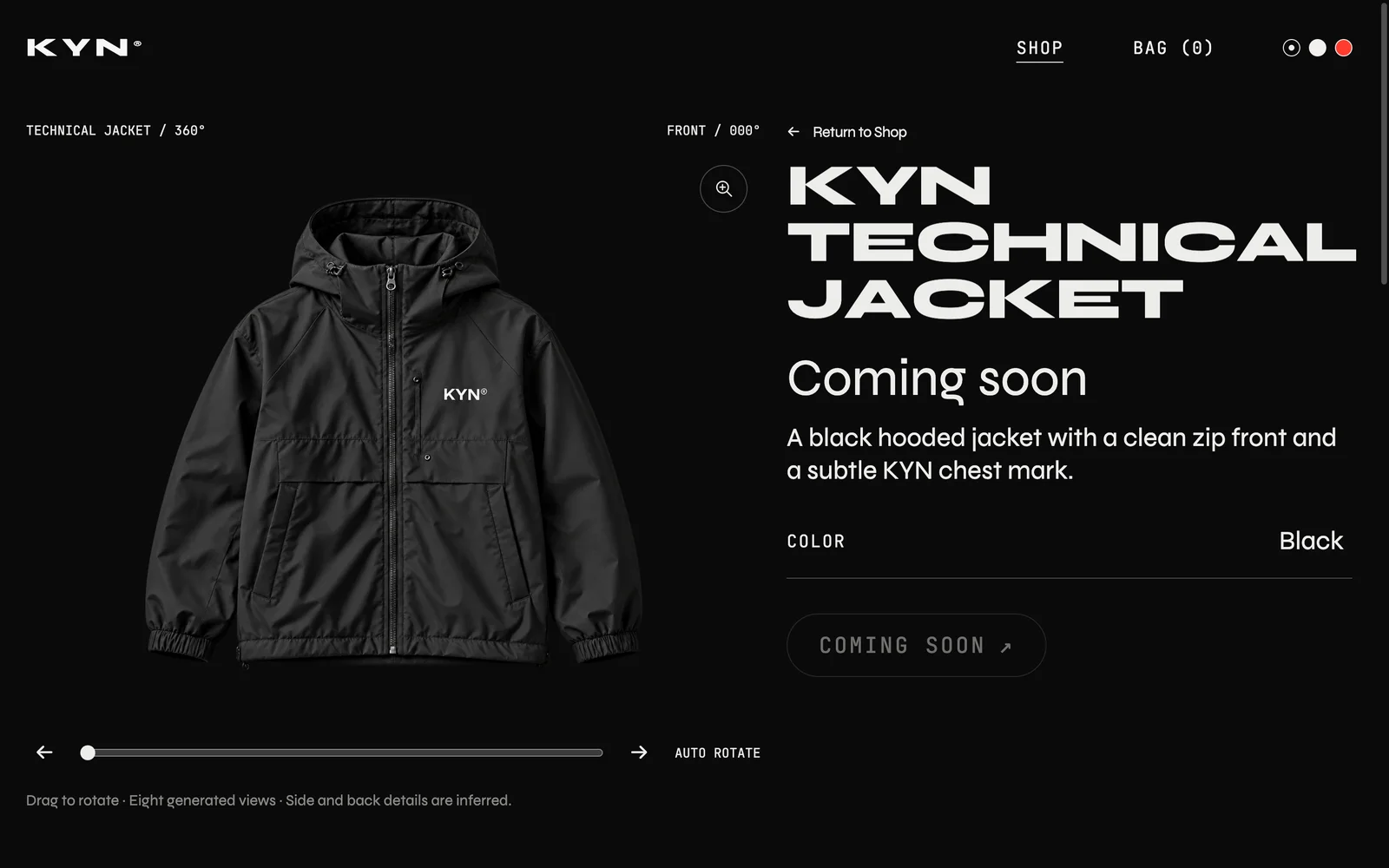
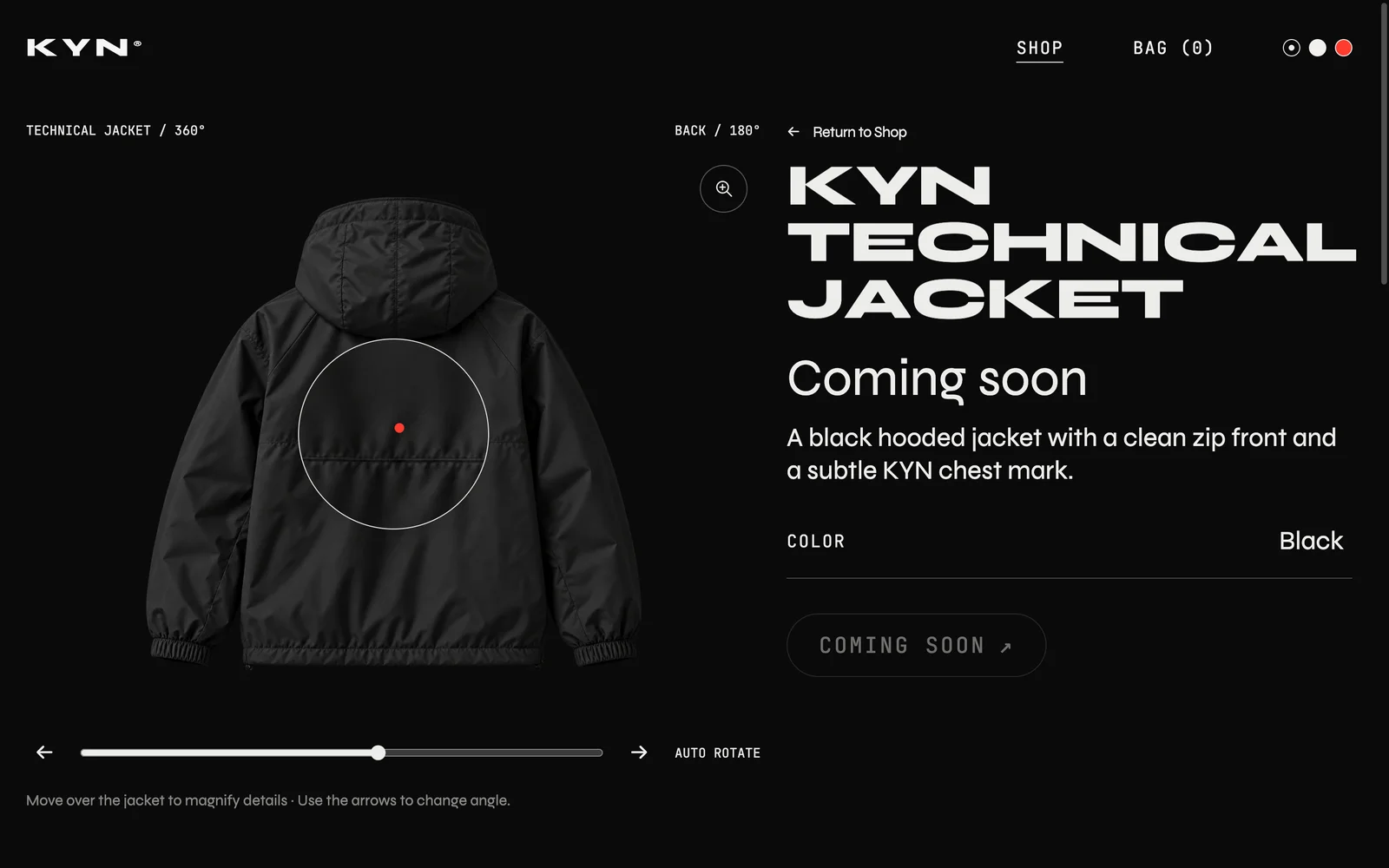
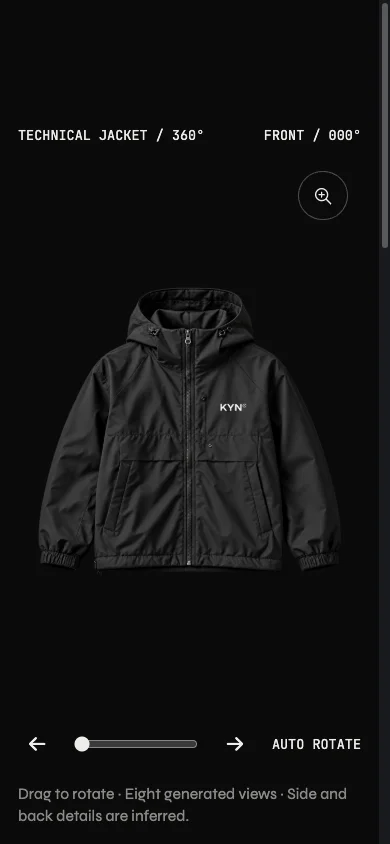
A large KYN wordmark opens into apparel, accessories and a graphic lookbook. Product pages pair lifestyle imagery with isolated views, concise descriptions and clear availability. The technical jacket adds an eight-angle, image-based viewer with rotation controls and magnification. Dark, light and red themes give the same interface three distinct moods.
The storefront & visual system
6 screens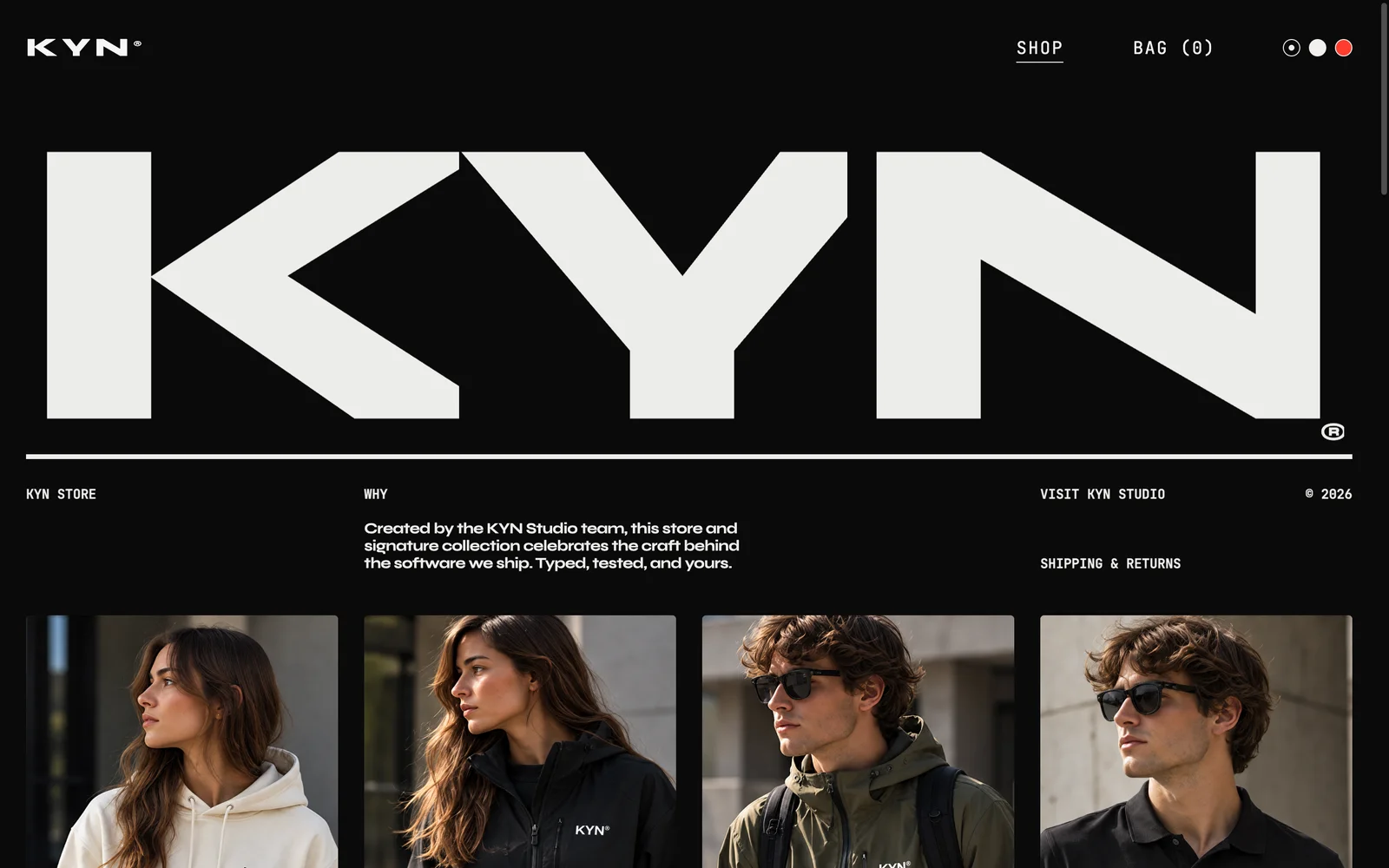
Inside the product pages
3 screens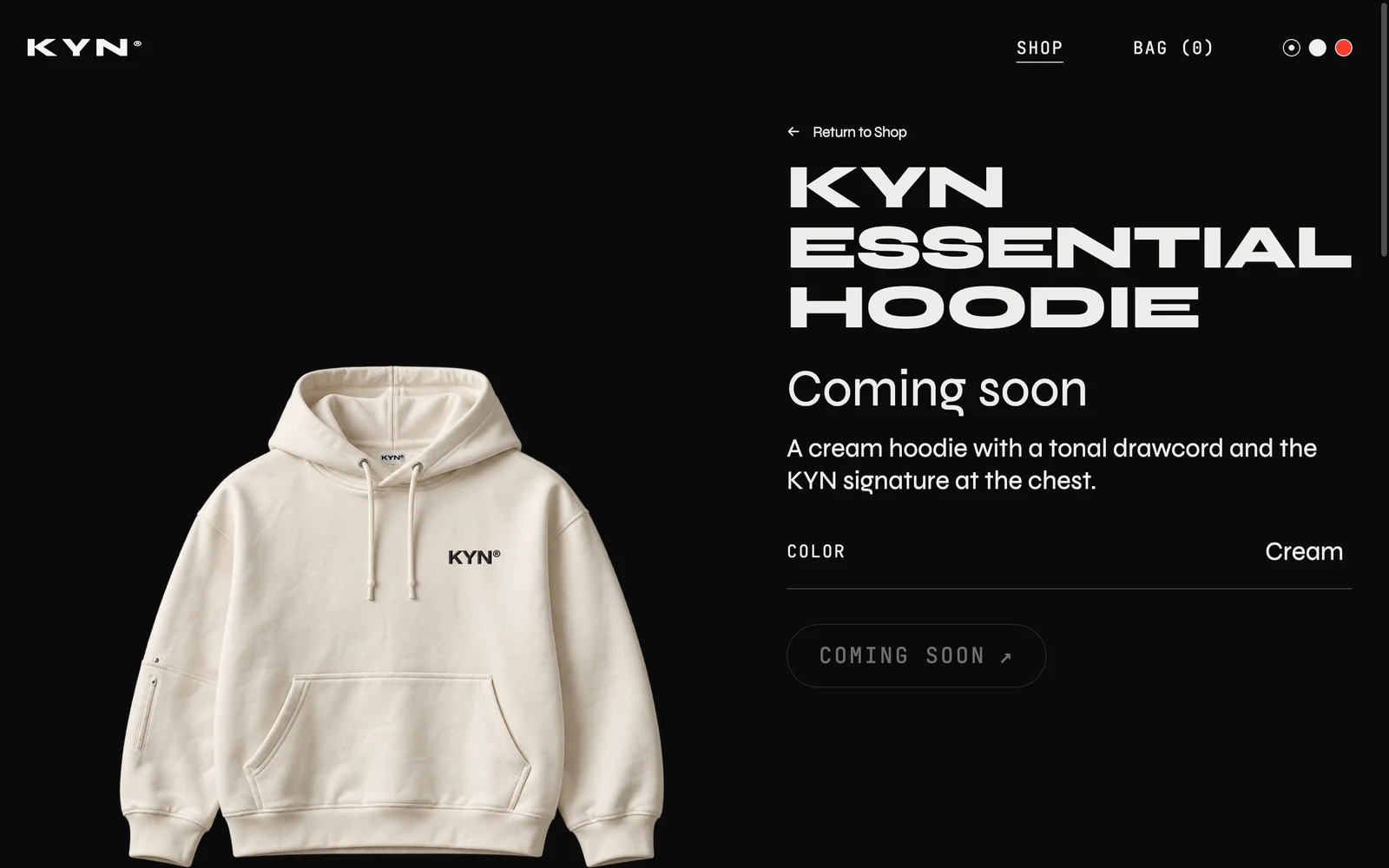
On a narrower screen
2 screens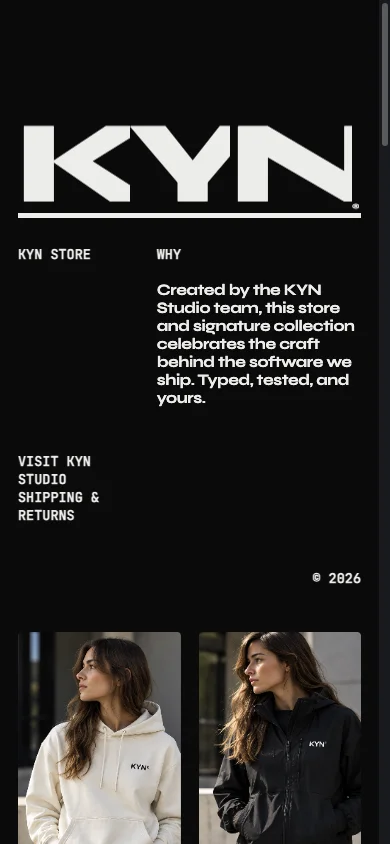
About the product visuals
The project repository documents AI-assisted processing and generation of product imagery. The jacket viewer uses eight separately generated images, with side and back details inferred from a front reference. The case study screenshots show the actual website UI; the product imagery inside that UI is not evidence of a physical shoot, 3D scan or final manufactured garment.
Static pages. Focused interactive components.
Astro provides the storefront structure, with React components for interactive interface state. Tailwind CSS and shared tokens define the visual system; GSAP supports the motion layer. Nanostores persists the local bag in the browser. Product data is local JSON, not a verified Shopify or Stripe integration. Catalog-aware metadata avoids presenting placeholder zero prices as purchasable offers.
Stack
Stack